
Color: A Workshop for Artists and Designers


If you are either an educator in need of color theory assignments, or an artist looking to exercise your color “muscle”, this text will fill that void.

Color: A Workshop for Artists and Designers (2nd edition) by David Hornung offers an approach to color theory with projects that build understanding as you advance through the book. With assignments that are primarily geared toward painters, it is possible to adapt some of the lessons for use on the computer (with a little work).
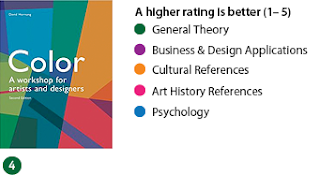

http://www.amazon.com/Color-2nd-Workshop-Artists-Designers/dp/1856698785/ref=sr_1_1?ie=UTF8&qid=1422827927&sr=8-1&keywords=Color%3A+A+Workshop+for+Artists+and+DesignersThis is one of those a texts whose strength is not derived from historical, cultural, or psychological references. If your intent is to obtain a book that uses (only) practical approaches to cement color concepts—this one’s for you!


*Note to the editors: Please correct the misspelling of Munsell’s name!

Popular posts from this blog

Purple for the Privileged

Murex Brandaris For centuries, the color purple was both an elusive and exclusive hue. From the time of Ceasar till the conclusion of the Byzantine Empire, purple was worn by kings and those serving in a high office or positions of influence. Rulers like Nero would sentence anyone to death who dared to wear imperial purple. The Roman emperor Diocletain however, took a more economical approach by collecting taxes from anyone who was compelled to slip on the hue. Up until the 1850’s, the arduous process of acquiring this color was more involved then its close cousin—red. Not unlike red, purple was also derived from the animal kingdom. Farmed from the Mediterranean region by the Phonecians as far back as 1500 B.C., Tyrian Purple came from the mucous secretion of a predatory sea snail’s hypobranchial gland ( murex brandaris , murex trunculus , bolinus brandaris ). The sea snails were soaked and then boiled in large vats which allowed the “juice” to be removed from the gland. It t...

Another Pinboard to Follow

Having resisted Pinterest for about a year now, I finally dipped my toes into the virtual pool of pinboards. My apprehension was truly misdirected and I've come to find that the concept of organizing visual images/links onto a virtual board has become a great teaching tool. After covering the typical graphic design topics such as typography, and history it was a natural move to include color among the related topics. So here is a link to my All Color Matters pinboard .

Color

Taking a more fine art approach, Color draws from past, and present art movements for aesthetic examples on basic color theory application. In depth chapters explore topics such as psychological/compositional effects, color relationships, subtractive/additive media, fine art and applied design. Where Color Workbook by Becky Koenig takes a more “hands-on” approach to color theory, Color presents the realities of color uses from a working artist's point-of-view. Other subjects mentioned include computer art, video, architecture, landscape design, sculpture, and clothing. This book does fall short in two areas; cultural influences and the omission of any suggested exercises for students to back-up the text. This normally wouldn't be an issue, however given the high retail price of $93.00, it would be difficult to justify this purchase to the budget minded student unless it can be aquired via used or heavy discount. Color (Sixth Edition) by Paul J. Zelanski, Mary Pat Fishe...